Queer Places:
University of Cambridge, 4 Mill Ln, Cambridge CB2 1RZ
81 Mortimer St, London W1W 7SH, UK
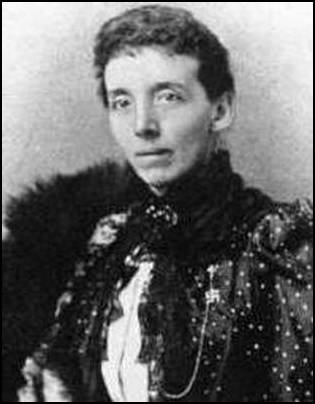 Harriet Isabella Cooper (known as Isabel, January 31, 1854 - March 3, 1914) was born on January 31, 1854, in Amritsar, Punjab, India. She was the daughter of Mary Steel and
Frederic Henry Cooper, a high-ranking colonial official in the Indian Civil Service who served as the Commissioner of Lahore.
Harriet Isabella Cooper (known as Isabel, January 31, 1854 - March 3, 1914) was born on January 31, 1854, in Amritsar, Punjab, India. She was the daughter of Mary Steel and
Frederic Henry Cooper, a high-ranking colonial official in the Indian Civil Service who served as the Commissioner of Lahore.
She was the elder sister of Laura Mary Cooper, a prominent Theosophist. Because her father strongly advocated for female education, Isabel received a robust early
education.
Following an accident in 1877, Isabel suffered a severe injury that left her unable to walk for two years. During this prolonged period of immobility, she read
extensively, which included studying Helena Blavatsky’s foundational Theosophical work, Isis Unveiled.
After recovering, she pursued academic interests and spent a year studying at Girton College, Cambridge, between 1882 and 1883.
While at Cambridge, Isabel met fellow student Alfred John Oakley. They married in January 1884. Following their marriage, both adopted the hyphenated surname
Cooper-Oakley (with Alfred legally changing his name via deed poll).
Isabel moved within progressive, intellectual circles and was a guest at the Men’s and Women's Club hosted by pioneering feminist publisher
Henrietta Müller. Within British lesbian history, Isabel is recognized as a long-term female companion who openly shared
same-sex households with Henrietta Müller, part of a lifestyle that actively rejected traditional heterosexual marriage and social norms.
During the 1880s, Isabel established herself as a notable London entrepreneur, running multiple business ventures:
Opened in 1888 on Mortimer Street alongside her sister Laura and partners Eliza and James Hope, the 'Dorothy' Restaurant: was a successful ladies-only restaurant
designed to offer safe, respectable dining spaces for working women and shoppers.
In 1889, she partnered with Henrietta Müller to manage physical exchange and sales rooms, Brook Street Exchange and Sales Rooms, giving women a physical marketplace to
inspect goods before purchase.
Isabel participated actively in the mid-1880s and 1889 suffrage movements, sharing platforms with prominent figures such as Florence Fenwick Miller and
Emmeline Pankhurst to agitate for women householders' inclusion in the Franchise Bill.
Isabel drew her husband into the Theosophical movement. In 1884, they joined the Theosophical Society and traveled to India via Egypt alongside Helena Blavatsky.
By late 1890, Isabel lived communally with other prominent Theosophists (including Annie Besant) at Avenue Road in St John's
Wood, London. Shifting away from her commercial and suffrage endeavors, she became an international lecturer and prolific author focusing on esoteric history, mysticism, and
Freemasonry.
In 1905, Annie Besant appointed her head of the International Committee for Research into Mystical Traditions. Isabel traveled abroad to establish international branches,
setting up a Lodge in Italy and founding Hungary's first Theosophical Lodge.
Isabel Cooper-Oakley died on March 3, 1914, in Budapest, Hungary.
References:
- Encyclopedia of Occultism and Parapsychology (Entry: "Cooper-Oakley, Isabel (1854-1914)")
- Theosophy Wiki – Comprehensive biographical archive and timeline on Isabel Cooper-Oakley
- Women Who Meant Business – Detailed biographical research profiles on Isabel Cooper-Oakley and Henrietta Müller documenting their business ventures, social networks, and enterprise history.
- Pert, Alan. Red Cactus: The Life of Anna Kingsford (2006)
- Meade, Marion. Madame Blavatsky: The Woman Behind the Myth (G.P. Putnam's Sons, 1980)
- The Women’s Penny Paper / The Woman's Herald (1888–1893)
- The Theosophist (Correspondence and General Reports of the Theosophical Society, Adyar)
- England Census Records (1891 Census, St John's Wood household documentation)
- London, England, Church of England Marriages and Banns, 1754–1932 (Marriage record for Harriet Isabella Cooper and Alfred John Oakley, January 5, 1884)
Support this project
This website is a passion project researched, developed, and funded entirely by me. If you find the content valuable and would like to help support the ongoing research and hosting costs, any contribution is deeply appreciated.
Thank you for keeping this independent resource alive!
My books on Amazon: Elisa Rolle's books
BACK TO HOME PAGE